The Room Is Missing Its Grandpa
Let me say this plainly.
We’re very good at talking about young men in crisis—panels, think pieces, task forces. We worry over boys without structure, without direction, without anyone to point to and say: there—that’s what it looks like on the other side.
Meanwhile, we sideline the men who’ve already made that crossing.
What shifts
If a man lives long enough and does the work, the heavy lifting eases. Urgency leaves the voice. The need to dominate the room, fix everything, carry it all—it fades. Not from failure, but from completion.
What replaces it is quieter: watching, waiting, a well-timed word that redirects without spectacle. From the outside, it can look like withdrawal.
It isn’t.
Not every older man becomes this. Some turn brittle, checked out, or bitter. The room isn’t missing age. It’s missing an elder.
Energy without memory
Young men bring drive. Necessary. But energy without memory is reckless. It doesn’t recall outcomes; the same edges get tested again.
Experience supplies that memory—if it was reflected on. Twenty years of the same mistake isn’t wisdom. It’s habit. The elder is the one who learned.
What goes unmarked
We reward what’s visible: speed, output, status. Entire systems are built for that phase.
We have less language for what follows—when a man steps back from the center without disappearing and begins shaping what happens around it. If force and hustle are the only metrics, that shift reads as loss.
So the role narrows. Presence gets reserved for ceremonies, holidays, milestones. Guidance, less so. And the men who never grew into elders don’t know what’s missing.
A scene
Last spring. Sunday afternoon.
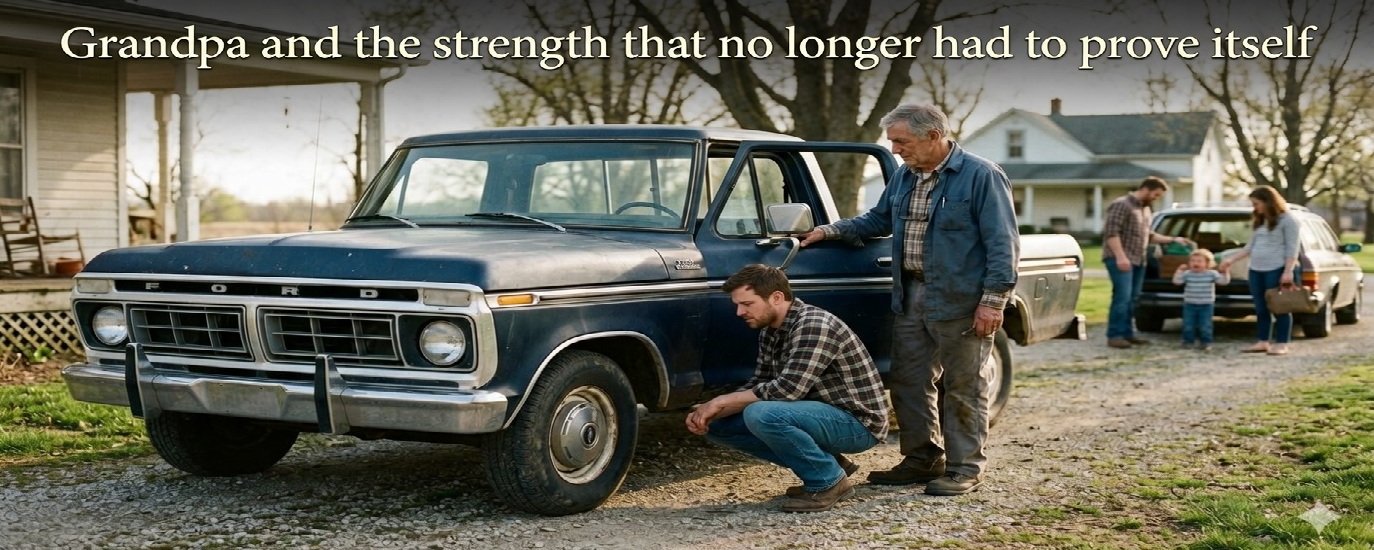
A grown son loading his family into the car—toddler crying, wife juggling bags, the usual rush. His father stood by the driver’s door, listening to the engine idle a second longer than anyone else would.
“Sounds a little rough,” he said.
“It’s fine. I’ll get to it.”
The father didn’t push.
“Your grandfather’s truck went through two engines. First one seized on the highway—no one checked the oil for nine months. Second one? Same thing.”
He walked back to the porch.
The son stood there a moment, then popped the hood. The dipstick came up dry.
No lecture. No triumph. No tow truck that month. The only person who knew why was sitting on the porch, drinking coffee.
Another version
Sometimes he doesn’t say anything.
He shows up on a Tuesday morning, finds the oil and filter that have been sitting on the garage shelf for three months, and does it himself. Fifteen minutes. Hands wiped on a rag. Then he leaves.
The son comes home, sees the new sticker on the windshield, and understands.
No shame was spoken. None was needed.
Certainty up close
In a tense room, an older man sometimes speaks—not to win, but to stop a trajectory before it turns costly. He doesn’t raise his voice. He’s just certain.
Those moments are easy to miss. They arrive as interruptions. Or not as words at all—just a changed filter and a closed hood.
That kind of certainty doesn’t advertise. It can’t be faked.
Holding the line
There’s a difference between resisting change and recognizing when momentum is about to overshoot. Not everything that accelerates is progress.
Someone has to name that early—or quietly prevent the consequence.
Often, no one does. The men with the memory to see it have been pushed to the edges, or never became elders in the first place.
What we’re left with
Some of these men are still around. You’ll find them at gatherings—where a life gets marked. Less often where direction is set.
Look instead for what doesn’t happen: an engine that doesn’t seize, a family that isn’t stranded, a repair that never becomes necessary.
There’s usually a reason.
It doesn’t announce itself.
And yet we keep asking where the role models are.
They’re still in the room—the ones who earned the right to be quiet.
They’re not shouting.
Sometimes they’re under the hood.