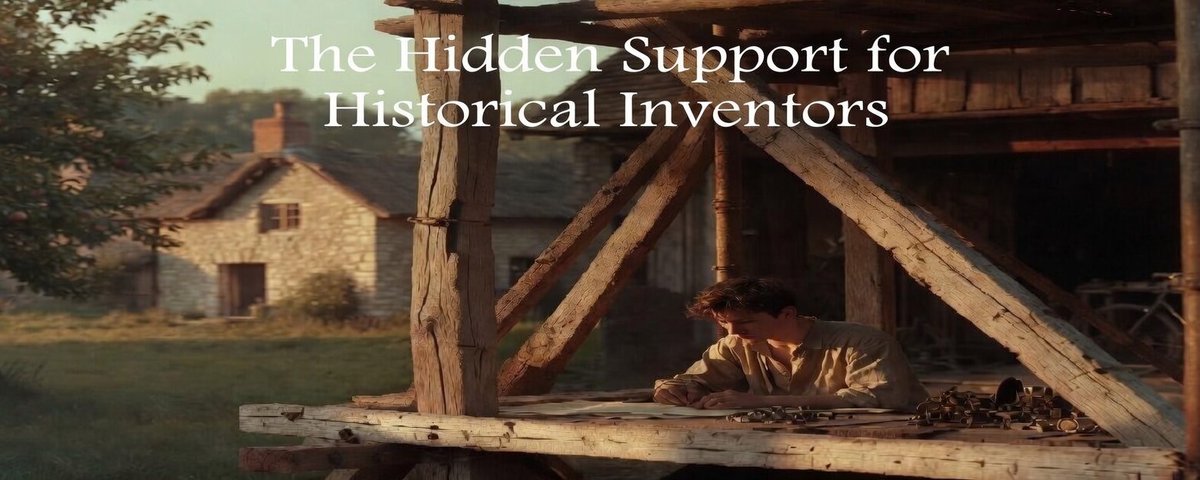
A living floor is not abstract. It is an elder in the next room, a grandmother whose household means a roof, an extended family that absorbs the cost of someone being unproven. It existed not as sentiment, but because the structure of life made it viable—and in turn, it quietly shaped how people behaved toward one another.
The Material Baseline
For most of human history, the elder’s role was material before it was symbolic. A grandmother’s household meant shelter. Extended family meant risk was pooled rather than individualized. Failure did not immediately become collapse; it was contained inside a larger structure.
This arrangement was not primarily driven by goodwill. It rested on conditions that made it practical. Households were units of production as much as consumption. Land, tools, or a trade tied income to place. Property changed hands slowly. Wages and resources were often shared. Mobility was limited, and redundancy—multiple adults under one roof—was a form of insurance against instability.
The “floor” existed because the cost of maintaining it was offset by how work, risk, and assets were organized.
That arrangement did two things at once: it created margin and it created constraint.
Margin for Trial
When survival is distributed across a household, time opens up—but not just any time. It is time decoupled from immediate market validation. A young person can learn, experiment, or fail without needing each step to justify itself economically.
What looks like delay is often buffered development. Repetition, failure, and adjustment happen without immediate penalty—not because consequences disappear, but because they are absorbed across a wider structure.
This margin is not abundance. It is shared risk carried by people who remain physically present long enough to absorb it.
At Woolsthorpe, Isaac Newton’s father died before he was born, and his mother remarried, leaving him in his grandmother’s care. Whatever the emotional reading, the material function is clear: shelter, stability, and time not immediately converted into survival labor. During plague closures, away from institutional demands, he worked through the foundations of calculus, motion, and gravity.
The point is not exceptionalism. It is that long stretches of undirected time were structurally available inside a household that could carry him while nothing obvious was being produced.
The house on Hawthorn Street reflects the same pattern. The Wright brothers emerged from a modest but stable structure where income, attention, and tools were shared. Work was steady but not absolute. There was enough continuity for sustained experimentation, and enough proximity for knowledge to circulate informally.
Their bicycle shop later provided both income and space. They built, tested, failed, and rebuilt over years without external urgency forcing premature closure.
Again, the key condition was not wealth. It was tolerance for extended uncertainty inside a structure that did not break under it.
Constraint Inside the Margin
The same system that provided slack also enforced limits. The constraint was not simply the presence of elders, but a dense loop of observation and reputation within a group you could not easily exit.
Proximity creates low-friction feedback. Behavior is seen continuously, not intermittently. Correction happens early, informally, and at small scale—before patterns harden and before consequences become expensive.
In such a household, drift does not accumulate unnoticed. Not just major failures, but small deviations are adjusted in real time.
Elders did not need formal authority to intervene. They would say things like “Don’t get into trouble” or “Don’t spend it all in one place.” Half-joking, but pointed. These were not literal instructions so much as signals—reminders about restraint, foresight, and regard for others.
Because you remained inside the same social field, you internalized its expectations. You thought twice before acting carelessly, not because of distant rules, but because someone who understood the long arc of consequences was present and paying attention.
This is a timing advantage. The system intervenes upstream, when change is easy, rather than downstream, when problems have already formed and require blunt correction.
What Has Narrowed
What has changed is not just the absence of elders, but the unbundling of the functions they performed.
Income is now individualized. Housing is smaller and more mobile. Risk is priced at the level of the person rather than the household. Feedback has shifted from continuous and local to episodic and institutional.
As a result, both halves of the older system have thinned. There is less tolerance for extended uncertainty, and weaker early correction. The system waits longer to respond—and when it does, the response is more formal, more delayed, and often more severe.
What was once addressed in the moment becomes something handled later, after it has already stabilized into a problem, or not addressed at all.
The result is not simply looser behavior. It is a change in timing and scale: fewer small adjustments early, more large interventions late.
What the Floor Actually Held
The older scaffolding absorbed uncertainty long enough for outcomes to form. It allowed work to begin before it was fully coherent, and behavior to be corrected before it became normalized.
It combined two functions that are now often separate: carrying the cost of development and providing early social regulation.
That combination is what has thinned.
The trade is clear. The older arrangement limited privacy, mobility, and sometimes autonomy, but in return it provided buffered development and continuous, low-cost correction. The modern arrangement expands independence but reduces both the margin for incompletion and the mechanisms that keep drift small.
Not every outcome was better. Not every correction was accurate. Not every elder functioned well.
But the system contained something specific: it could hold people while they were still incomplete, intervene before small errors scaled, and maintain a shared standard of conduct through presence rather than policy.
What has been lost is not simply a feeling. It is a set of conditions—material and social—that allowed incompletion to survive long enough to become something better, and that kept everyday behavior aligned through steady, immediate accountability.