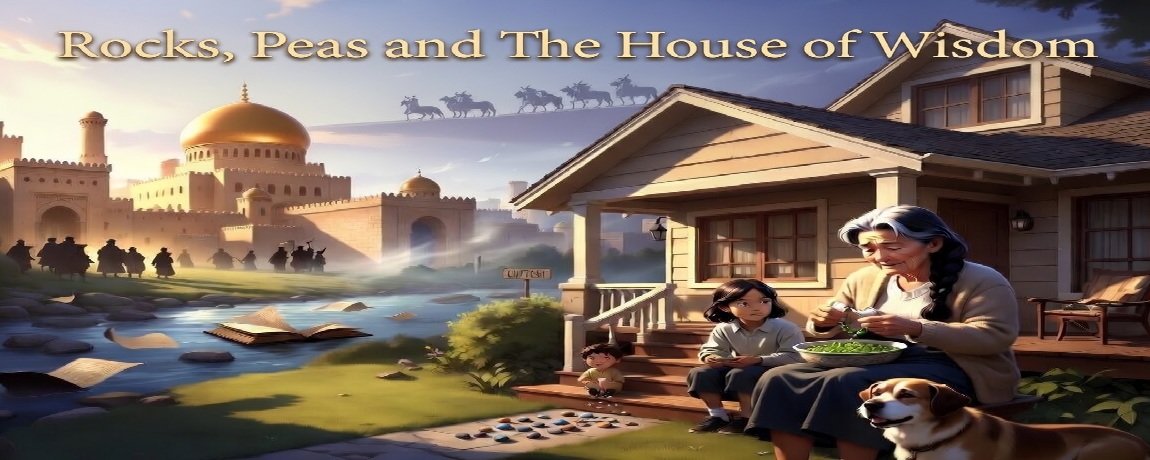
The Delgado house was never quiet.
It was not built for quiet. It was built the way houses on Cutter Street had been built when people still believed three bedrooms and one and a half baths could contain a family if the family agreed to bend in the right places. It stood in the middle of the block with its narrow driveway, its uneven front walk, its split-level stairs worn smooth by feet that never learned to tiptoe. Sound traveled through it the way smells did: under doors, through vents, up through the floorboards, down into the basement, carrying news before anyone had decided to announce it.
The kitchen woke first every morning. The refrigerator clicked and sighed. The coffee maker coughed itself into usefulness. A cabinet hinge complained whenever someone reached for the sugar. On good mornings the air smelled of sofrito, garlic, and sweet plantains touching hot oil. On rushed mornings it smelled of burnt coffee, wet dog, and whatever had been saved from the night before under foil.
The front door had given up pretending it was a barrier. It sighed on its hinges whenever someone came or went, which was often. Neighbors came by to borrow tools. Cousins came by to drop things off and stayed for dinner. Friends of friends appeared in the driveway looking for Ernesto because somebody's alternator was acting up, or a lawn mower would not turn over, or a bathroom faucet had become, in the language of adults, "a situation." Nobody in the Delgado house seemed surprised by this. People arrived. People needed things. People were fed.
Since Grandma Rosa had moved into the basement eighteen months earlier, the house had been shifting and stretching like a body learning a new way to walk.
Rosa's room had once been the downstairs family room, where Ernesto kept an exercise bike no one used, a television no one watched, and plastic bins full of clothes everyone insisted might fit somebody again someday. Claudia and Ernesto cleared it out over a weekend with the grim efficiency of people making space for something no one had planned for but everyone understood. Tito broke the handle off a storage bin and insisted it had been cracked already. Claudia said, "Of course it was," in a tone that meant it absolutely had not been.
Then Rosa arrived with two suitcases, three houseplants, a shoebox full of photographs, a leather-bound atlas with softened corners, and the small stubborn dignity of a woman who had outlived most of the people who thought they knew what was best for her.
"I don't need much," she said.
This was not exactly true.
Rosa needed her green mug, which no one else was allowed to use. She needed her medicines lined up in an order that made sense to her, not the order printed on the labels. She needed the chair angled toward the thin basement window so the morning light would find her. She needed to know where the salt was. She needed to hear the house above her.
And the house needed her.
Marisol, twelve and newly serious in the way children become serious when they suspect childhood is being quietly packed away without their consent, had given up half her room to Dani the same weekend Rosa moved in. Dani was eight, restless, compact, and passionately committed to rocks. Smooth gray stones from the alley. Rust-colored pieces from the schoolyard. White ones with tiny flecks that flashed when he held them near the lamp. A chunk of quartz Ernesto had once pressed into his palm and called magic, then refused to explain further.
Dani kept the best rocks under his pillow.
"You're going to crack your head open in your sleep," Marisol told him.
Dani shrugged. "Then they'll know I died rich."
"Rich in rocks?"
"Treasure is treasure."
He also kicked in his sleep with the steady purpose of a tiny machine tunneling through blankets. Marisol learned to sleep on the far edge of the bed with one knee braced against the wall.
Claudia and Ernesto took the front bedroom, where the radiator hissed too loudly in winter and the window stuck in summer. Uncle Tito occupied the guest room on a semi-permanent basis no one named directly. He had come "just until the job thing settled," then "just until the apartment thing made sense," then "just until after the holidays," which was a dangerous phrase in the Delgado family because there were always more holidays.
Even El Señor, the old dog with cloudy eyes and the expression of a minor official forced to supervise incompetents, had adjusted. He drifted from room to room with grave purpose and usually ended up across Rosa's feet, as if assigned there by an authority higher than Claudia.
Marisol's system was simple: wake before six and claim the kitchen.
Before six, the kitchen belonged to her. She could sit at the narrow table by the window, finish homework she should have done the night before, and listen to the house before it swallowed her. Before Dani asked where his socks were while wearing them. Before Tito began a sentence with "Now, technically" and ruined everyone's patience. Before Claudia started giving instructions from three rooms away. Before Ernesto stood before the open refrigerator in the trance of a man expecting breakfast to reveal itself.
The kitchen before six was Marisol's small country.
This morning, the system failed.
Grandma Rosa was already at the stove, frying plantains in a pan too small for the job.
The overhead light was off. The sky outside the window was still the pale blue-gray of almost morning. Rosa stood in her slippers and cardigan, hair braided down her back, one hand on the pan handle, the other resting near her green mug. She did not turn when Marisol stopped in the doorway.
"Sit," Rosa said.
"I didn't say anything."
"You were going to sigh."
"I was not."
Rosa slid a plate onto the table. "Then sit quietly and don't sigh."
Marisol sat.
The plantains hissed. Upstairs, Uncle Tito's snoring rattled faintly through the ceiling, a wet heroic sound that made the floorboards seem embarrassed. Outside, the garbage truck growled along Cutter Street, stopping, lurching, swallowing the week's evidence from every curb.
Rosa moved slowly in the mornings, but not weakly. There was a difference. She turned the plantains with care, pressing each slice down just enough. Her hands were thin now, blue veins raised along the backs, knuckles enlarged from arthritis, but they remembered everything. How to cut without looking. How to season by instinct. How to open a stuck jar by knocking the lid once against the counter, not twice. How to hold a fevered child's head over a bowl.
"Mija," Rosa said, pouring coffee into the chipped green mug, "did I ever tell you what Señor Alvarez told me about Baghdad?"
Marisol had learned that the correct response to one of Rosa's questions was rarely an answer. Rosa asked questions the way other people opened curtains: not because the window needed advice, but because light had to come in somehow.
"No," Marisol said.
Rosa smiled to herself and leaned back against the counter. "Ah. Then today is a good day."
She turned back to the plantains, crowding them in the pan so they hissed louder, gold pressing against gold.
"Señor Alvarez used to tell stories over the fence while watering his tomatoes. Half the water hit the plants. Half hit his shoes. He'd lean there in his undershirt with mud on his knees and talk like history had just passed him a note through the laundry line. He told me Baghdad was once the brightest city in the world. Not the Baghdad you see on the news now, all dust and trouble. The old Baghdad. The one built on the Tigris River in a perfect circle. Can you imagine, mija? A perfect circle, walls of burnt brick, gates opening to the four corners of the world, caravans arriving with silk, spices, glass, paper, stories. Streets full of merchants shouting over dates and copper pots. Courtyards blue with tile. Fountains flashing in the sun. And at the very heart of that city, right where the pulse beats strongest, they built something called the House of Wisdom."
Marisol had never heard this before. She stopped eating.
"Bayt al-Hikma," Rosa said, the Arabic rolling off her tongue like she had been saving it for this exact morning. "The House of Wisdom. It stood for almost four hundred years. Four hundred years of light, mija. Longer than this country has even existed. Longer than anything you have ever known or touched or tried to imagine."
The oil popped and sang.
"Señor Alvarez said it wasn't just a library. Oh, no, no, no. A library is a quiet thing, and this place was alive. It was a whole world under one roof. Imagine great rooms with shelves climbing up toward painted ceilings. Lamps burning late into the night. Tables crowded with ink pots, star charts, rolled scrolls tied with red cord, pages drying in careful rows. Scholars came from everywhere, Persia, India, Byzantium, Greece, places whose names Señor Alvarez said like he had tasted them first. They brought medicine and mathematics, poems and maps, old Greek books that had nearly been forgotten, Indian numbers that made counting easier, Persian astronomy that named the heavens like relatives."
Marisol stared. "For real?"
"For real." Rosa's eyes were on the pan, but she was seeing something else entirely. "Christian doctors argued beside Jewish mathematicians. Persian poets debated with Greek philosophers who had been dead for centuries but were alive again because someone had translated their words. They measured the circumference of the earth in there. They watched the stars and corrected their charts until the sky itself seemed to lean closer. They studied fevers, bones, eyesight, the movement of planets. They did not only keep books, mija. They talked back to them. A doctor would read what another doctor wrote a hundred years before and say, 'Yes, but I have noticed something else,' and then he would add his noticing. Knowledge piling up, layer on layer, like snow where snow is allowed to be warm."
"School would be so much better," Marisol said.
"So much better." Rosa pressed a plantain down with her spatula. "Señor Alvarez said you could walk into the courtyard and hear five languages at once, all of them arguing about stars and medicine and the shape of everything. The air smelled of old paper and lamp oil and cinnamon tea and the dust from a hundred different roads. And the scholars, listen to this, they were paid in gold by the weight of the books they finished. Gold for wisdom. Every ounce of truth you carried across a language, they paid you for."
From upstairs came a thump. Then Dani's voice: "I'm okay!"
Rosa laughed, warm and unguarded. "For almost four hundred years, they gathered all of it there. Safe. Protected. The caliph's walls around it, the caliph's guards at every door. They thought that if you gathered every beautiful thought the world had ever produced and put it under one magnificent roof, it would last forever."
Marisol watched the steam rise. "That sounds like it should have worked."
Rosa tilted her head. "It does, doesn't it? It sounds like exactly the right idea." She set the spatula down and looked at her granddaughter. "And also--"
She shrugged.
"And also, it depends."
Footsteps sounded overhead. The pipes groaned. The house began waking in layers, and Rosa turned back to the stove, and the story paused where stories sometimes pause, balanced on a word not yet spoken, patient as old paper.
By the time Marisol finished her plate, everyone else had started drifting in.
Claudia entered with her work blouse buttoned wrong at the collar and her hair pinned halfway up. She kissed Rosa on the cheek, kissed Marisol on the top of the head, opened the refrigerator, and immediately looked betrayed.
"Who ate the flan?"
The house paused.
There were ordinary silences, and then there was this silence: dense, guilty, self-protective. Even the refrigerator seemed to hold its breath.
Ernesto appeared behind Claudia and looked over her shoulder into the fridge, as though the flan might be hiding behind the milk.
"Maybe it got moved," he said.
Claudia turned only her eyes toward him.
"Moved where, Ernesto? To Tito's bloodstream?"
Ernesto wisely reached for the orange juice and said nothing.
Dani wandered in wearing one sock, a pajama shirt, and a suspiciously lumpy pocket.
"Dani," Marisol said, "is that a rock?"
"No."
"What is it?"
"A mineral."
"That's worse."
Uncle Tito shuffled in last, hair smashed flat on one side, T-shirt inside out, face arranged in the solemn neutrality of a man entering a courtroom where he knows the evidence is strong. He opened the refrigerator, looked in, and froze.
"...Not me."
Claudia closed the refrigerator with one finger.
"Tito."
He lifted both hands. "It was one piece."
"One piece?"
"One reasonable piece."
"It was half the pan."
"Half has corners," Tito said. "I was respecting geometry."
Ernesto laughed into his coffee and pretended to cough.
Rosa stirred beans at the stove, calm as weather, watching all of them with the expression of someone who had been present for this exact argument in various forms across several decades. She said nothing. She did not need to.
Marisol kept thinking about the House of Wisdom. About courtyards and five languages and dust from a hundred different roads. About something gathered so carefully it was supposed to last forever.
At school that day, the hallways smelled like floor polish and cafeteria syrup. She sat through math, English, and science with Baghdad still hovering somewhere at the edge of her mind, not fully formed yet, still just golden and incomplete, the way a story feels when you've heard only the first part of it. When Mr. Nolan asked what made a civilization stable, kids raised their hands and said laws, money, armies, food.
Marisol did not raise hers.
She was still waiting to find out.
That afternoon, Tito's car did not start.
It was a faded blue sedan with a dented passenger door, a rear bumper held in philosophical agreement with the rest of the vehicle, and a check-engine light Tito had named Gerald. Tito claimed the car had character. Claudia claimed it had warnings. Ernesto claimed it had at least another year if people stopped ignoring noises.
The engine gave a dry, frantic click-click-click and died with a wheezing hiss.
Tito got out and kicked the front tire with the conviction of a man who believed in symbolic gestures.
"That helps," Marisol said from the porch steps.
"It lets the car know I'm serious."
Dani sat beside her, arranging rocks in a line according to a system only he understood. "Kick it again."
"No," Ernesto called from the garage. "Do not encourage diagnostics by violence."
He emerged with the heavy toolbox, the old red one with chipped paint and a handle wrapped in electrical tape. He was still in his work pants, face tired in a way that made Marisol feel older just looking at him. But when he reached the car, something in him settled. He put the toolbox down, lifted the hood, and leaned into the engine as if greeting a difficult relative.
Tito hovered beside him, trying to look knowledgeable.
"Battery," Tito said.
"Maybe."
"Starter."
"Maybe."
"Alternator."
Ernesto looked at him.
Tito nodded wisely. "Could be emotional."
Rosa came out carrying a bowl of peas and settled between Marisol and Dani, lowering herself into the porch chair in that careful way she had lately, not quite the way she used to move. El Señor drifted out behind her and arranged himself across her feet with the gravity of an old official assuming his post.
Pop-snap. Three green peas into the bowl.
Rosa looked out at the street. Tito was holding the flashlight at the wrong angle again. Ernesto had not yet told him so. He was waiting to see how long it would take.
Pop-snap.
"So," Rosa said, "the Mongols arrived."
Marisol turned. "The what?"
"The--" Rosa stopped herself. She laughed, a warm, full sound that made El Señor lift his head. "Forgive me. I jumped ahead. That is a bad habit of mine. Señor Alvarez used to tell the story in order and I always remembered it backwards." She shelled another pod. Pop-snap. "Let me back up."
Dani looked up from his rocks. "Where do Mongols come into this story, Grandma? You said it was a house of books."
"I did. And it was. But every house of books eventually gets a knock on the door." She settled the bowl more comfortably on her lap. "Now. Far to the east of Baghdad, past mountain ranges that would take you a year to cross, past deserts that could scrape the water from your bones, past plains of grass that went on so long you might forget what a tree looked like, there lived the Mongols. Horsemen from the steppes. Grandchildren and great warriors of Genghis Khan, who had built the largest land empire the world had ever seen by being, and this is the part people always get wrong, not just ferocious. Organized. Disciplined. Formidable."
"Like an army?" Dani asked.
"Like an army that knew how to become a road, a storm, and a message all at once," Rosa said. "Every rider knew his place in the line. Every horse had a purpose. Every signal meant something. They sent messages faster than kings could send prayers. They counted supplies. They studied rivers. They brought engineers with them, men who knew how to build siege machines and bridges, men who could look at a wall and hear already where it wanted to break. Señor Alvarez used to say lazy people call a thing wild when they are too frightened to notice how intelligent it is."
"Higher," Ernesto said from under the hood.
"Not into my eyes," Tito said.
Pop-snap.
"Hulagu Khan, that was the grandson who rode west, did not come to Baghdad like a drunk man crashing through a window. He sent messengers first. Very polite messengers, with a very clear message." Rosa's voice took on a mild, theatrical formality. "'Great Caliph. You know who we are. You know what we have done to every city that refused us. We are offering you a choice: surrender now, peacefully, and your people will live. Or--'" She returned to herself with a tiny shrug. "Or don't."
"And the caliph said no?" Marisol asked.
"The caliph," Rosa said, "thought his walls were thicker than history." She shook her head. "He had ruled for a long time. He had powerful friends, or thought he did. He had the round city, the old glory, the stories people told about Baghdad as if stories themselves could stand guard at the gates. So he said no."
Pop-snap.
"Hulagu's army was so large it swallowed the horizon. People watching from the city walls saw dust first, a brown veil rising where the earth met the sky. Then the horses. Then more horses. Then wagons, engineers, archers, men carrying timber and rope and iron. The Mongols surrounded the city with their own walls and their own ditches. Imagine that, mija. Baghdad had walls, so the Mongols built another wall around those walls, like closing a hand around a jewel. They built bridges across the Tigris in days. They flooded canals. They cut off escape. They did not rush because they did not need to rush. They had plans inside plans. They had patience."
Under the hood, metal clinked. Tito had finally raised the flashlight.
"They broke the walls?" Dani asked.
"They broke the city," Rosa said, and her voice became quiet enough that the porch seemed to lean closer. "The caliph surrendered in the end, but by then surrender was a door that had already closed. And when Baghdad fell, the Mongols did what conquerors do. They took power. They took treasure. They took lives. But the part that made Señor Alvarez put down his watering can, the part he told me like he was trying to warn every tomato plant in the yard, was what they did to the House of Wisdom."
A car went by on Cutter Street, someone's radio fading with it.
"They went to that beautiful place of lamps and pages. They found the medicine, the star charts, the mathematics, the poetry, the translations, the records. Four hundred years of careful hands. Four hundred years of people saying, 'Here, let me copy this so it will not be lost.' And they carried the books out, armload after armload, and threw them into the Tigris."
Dani set down the gray stone he'd been turning in his fingers.
"So many books," Rosa said, "that Señor Alvarez swore the river turned black with ink for days. You could not see the bottom. The water ran thick with dissolved words, medicine and astronomy and philosophy all loosening into dark clouds until you could not tell where one wisdom ended and another began. Pages opened under the water like pale flowers. Star maps spread out and broke apart. Recipes for fever tonics drifted past reeds. Poems about spring caught on branches. Numbers bled into the current. Imagine standing on the bank and seeing a whole world become water."
Marisol felt it then, a cold thing moving through her despite the warmth of the afternoon. She could see it. Pages lifting and falling. Ink spreading through the current. Centuries dissolving while the river kept doing what rivers do.
"Why would you throw books in a river?" Dani asked.
Rosa looked at him with the full weight of her attention. "Because even if you cannot read something, you can understand its weight."
Under the hood, Ernesto reached without looking. Tito handed him the wrong wrench.
Ernesto held it up.
Tito squinted. "That's not it?"
"No."
"How many wrench shapes can there be?"
"Enough to humble you."
Rosa shelled three more peas. Pop-snap. Pop-snap. Pop-snap.
"And here's what Señor Alvarez said most people miss," she continued. "The knowledge did not all die. Some scholars saw that dust cloud before the gates broke. Some had friends in other cities. Some had fear, which is not always a foolish thing. They took what they could carry. Books in sleeves. Scrolls tucked into robes. Poems memorized because paper was too heavy and the road was too long. They walked north, south, east, west. To Damascus. To Cairo. To Persia. To Córdoba. To little towns whose names nobody remembers, where Baghdad was just a rumor and a traveler at the door."
Pop-snap.
"The Mongols could blacken one river. They could burn one building. But they could not blacken every kitchen, every workshop, every back porch where someone was teaching someone else the shape of a thing."
Marisol watched her father's hands. They were grease-stained, nicked at the knuckles, broad across the palms. They moved with quiet confidence, not fast exactly, but without wasted panic. He checked the battery terminals, scraped corrosion, tightened something, listened to the car the way Rosa listened to soup. He did not make speeches about knowing things. He simply knew them.
"The hands remember," Marisol said.
Rosa's face changed. Not much. Enough.
"Yes," she said. "The hands remember."
Ernesto stepped back from the engine. "Try it."
Tito turned the key. The engine coughed once, twice, then caught with a rough, triumphant rumble.
Dani cheered. Tito leaned out the window and raised both fists like a prizefighter.
"Machine defeated!"
Ernesto wiped his hands on a rag. "Battery terminal cleaned."
"Same thing."
"It is not the same thing."
"It started, didn't it?"
Claudia appeared in the doorway, arms crossed. "Does this mean you can drive yourself to buy replacement flan?"
Tito's victory faded somewhat.
"Ah," he said. "The empire demands tribute."
Rosa was smiling, watching all of them, Tito's theater, Ernesto's quiet satisfaction, Claudia's folded arms, Dani climbing down from the porch railing. She shelled the last pod and set the bowl aside.
"That is what Señor Alvarez always said," she murmured, more to herself than anyone. "You don't save a thing by locking it behind one heavy door."
But she did not finish that thought then. She tucked it away the way she tucked away everything that needed a quieter room.
By dinner the house smelled of roasted garlic, cumin, beans, and chicken Claudia had seasoned in a way that made everyone forgive the day. Tito returned with a carton of ice cream and a new flan from the bakery, both held before him like offerings to a god he had disappointed.
Claudia inspected the bakery box, then the ice cream seal, then Tito.
"You understand this does not erase history," she said.
"No empire survives without mercy."
"No empire survives Tito at midnight."
But she took the box, and the small smile that broke through was not hidden quickly enough.
Dinner happened the way dinner always happened: in stages, waves, negotiations. Dani objected to onions he could not actually see. Ernesto asked whether anyone had moved his good pliers and everyone said no in a way that suggested an investigation would be fruitless. Tito told a story about a man at work who believed mailboxes understood zoning laws. Claudia corrected three details in the story despite not having been there. Rosa ate slowly and watched everyone.
Marisol noticed that about her grandmother. Rosa watched without seeming to watch. She knew who was tired, who was lying, who needed seconds, who was pretending not to be worried, who had gone too quiet. She saw the house not as rooms but as currents. A plate shifted here, a shoulder lowered there, a spoon set down too hard. The small empire of Cutter Street did not need written reports. Rosa could read smoke.
Later, after dishes were done and Dani had been sent upstairs to remove rocks from his bed under supervision, Rosa sat across from Marisol at the kitchen table. The old atlas lay between them beside Marisol's notebook.
They were drafting jokes for Marisol's sleepover.
This had begun because Elena Patterson's sleepovers were famous for two things: homemade pizza and joke contests. Marisol did not care about joke contests, which meant she cared very much and was terrified of losing.
"Why don't skeletons fight each other?" Rosa asked.
Marisol scribbled the setup in her notebook. "Because they don't have the guts."
Rosa laughed. Not politely. Not the little puff adults gave children for effort. She laughed with her whole chest, deep and warm, eyes crinkling, one hand pressed to the table.
"That one is old," she said.
"Old things work."
"Sometimes."
"What do you call cheese that isn't yours?"
Rosa looked suspicious. "What?"
"Nacho cheese."
Rosa blinked. Then she laughed again, harder this time, and Claudia called from the living room, "Do I want to know?"
"No," Marisol and Rosa said together.
The atlas had belonged to Rosa's husband, Abuelo Mateo, who had died when Marisol was six. Marisol remembered his hands more than his face: one thumb flattened from an old injury, a silver ring that clicked against glass, the way he folded napkins into triangles at restaurants. The atlas still carried him faintly. Pipe tobacco, though he had quit before she was born. Basement dust. Something medicinal. Something like rain.
Its maps were outdated. Borders had changed. Countries had split and renamed themselves. Roads ended where new roads now ran. Some cities were smaller than they had become; others were larger than history had allowed them to remain. But Rosa said that was why she liked it.
"A perfect map is already lying," she said. "The world moves too much."
A few nights later the heat broke.
All week the house held summer like a grudge. The upstairs rooms stayed thick and airless after sunset. Fans moved hot air from one corner to another with great determination and little success. Everyone became irritable in predictable ways. Claudia cleaned angrily. Tito narrated his discomfort. Dani slept sideways. Ernesto sat outside after work with his shirt collar open and said, "Tomorrow it'll break," for three days in a row.
On Thursday, it finally did.
A cool breeze moved through the house after dinner, slipping past window screens, lifting the edge of a receipt on the counter, carrying away the heaviness that had settled into the walls. The whole family seemed to exhale at once, as if they had all been holding something and did not know it until they let it go. Claudia opened windows. Ernesto found the box fan. Tito announced that he had personally negotiated with the atmosphere.
Nobody answered him.
Marisol found Rosa in bed, the atlas open across her knees.
The basement room was dim except for the lamp beside the bed. Rosa had folded a sweater over her legs though the air was only just cool. Her hair was loose around her shoulders, silver and black mixed together in the lamplight. She looked smaller in bed, which Marisol hated noticing and noticed anyway.
"You should be asleep," Rosa said.
"So should you."
"I am old. We are allowed to negotiate with sleep."
Marisol stepped inside. "Baghdad?"
Rosa nodded.
Dani appeared behind her, dragging a blanket, hair damp from his bath.
"I heard pages."
"You hear pages now?" Marisol asked.
"I hear everything."
"You slept through the smoke alarm last month."
"That was different."
Rosa patted the bed. Dani climbed up carefully and curled against Marisol's leg, already half-asleep despite his claims of surveillance. El Señor, offended at being excluded, groaned from the doorway and settled on the rug.
Rosa turned the atlas toward them.
It was open to the Middle East, the ancient routes traced in faded ink. The Tigris and Euphrates curved across the page like two blue veins. Baghdad sat between them, a small black dot that looked, Marisol thought, exactly like any other small black dot. You would not know just by looking that it had once held the world's thinking inside its walls.
Rosa traced a finger along the Tigris, following it south from Baghdad, then outward where the river branched and spread toward the edges of the map.
"Señor Alvarez used to end the story the same way every time," Rosa said softly, her voice dropping into that quiet, fireside register that made the room feel smaller and safer all at once. "He'd lean on the fence between our yards, dirt on his knees from the tomatoes, half his water already on his shoes, and he'd say, 'Rosa, here is the thing no one tells you about the House of Wisdom.'"
She paused. Dani's breathing had slowed.
"He'd say, 'The tragedy is not that the books were thrown in the river. The tragedy is that so many of them lived only there.'"
Marisol looked at the thin blue line of the Tigris.
"But they didn't lose everything," she said. "You said people carried books away. And people found pages in the reeds."
"Yes." Rosa smiled. "That is exactly the point. The pages that traveled survived. The ones carried in scholars' sleeves when they fled, the ones read aloud and memorized and whispered to students in other cities, the ones copied by hand in Cairo and Damascus and Córdoba and little towns whose names nobody remembers. A doctor in Cairo read a Baghdad medical text and saved a child. A mathematician in Persia read a geometry proof and built a bridge. A poet in Damascus read a love poem and wrote his own, and someone read that and wrote another, and on and on until--" She paused. "Well. Until we have telenovelas."
Marisol laughed despite herself.
"But what lived only in that one perfect building," Rosa said, "in those locked rooms, behind those thick walls, that went with the walls." She set her hand flat on the map. "One perfect place is one fragile thing. A single spark. A single flood. A single day when the army is larger than you believed possible and the caliph's pride is louder than his wisdom."
The breeze moved through the basement window and lifted the corner of a page and let it fall.
"Señor Alvarez said, and I have thought about this for fifty years, mija, so understand he was right, he said that keeping all your knowing in one beautiful room feels like safety. It feels permanent. You can walk through those halls and think: here is everything we are, protected forever. But that feeling is a lie a building tells you. Because a building is just stone. Stone is good for keeping rain out. It is not so good for keeping time from changing."
Rosa turned her hand over on the map. Her palm up. An old gesture, open as an offering.
"Sharing knowledge across many hands, many tables, many little fires, that is the only protection that works. When it is everywhere, you cannot drown it. When it lives in a thousand places, no army can take it in a day." She tilted her head toward the ceiling, toward the sounds of the house above them, Tito and Ernesto arguing baseball, Claudia correcting them, a drawer opening, a spoon dropping. "The Mongols took Baghdad. The river turned black. And still: a doctor in Cairo. A bridge in Persia. A poem in Damascus that became another poem that became something none of us have even read yet."
El Señor lifted his head from the rug, barked once at the dropped spoon as if fulfilling a contract, and settled again.
Rosa smiled toward the noise.
"The Mongols did not take this," she said.
She tapped the mattress.
"They did not take your father knowing how to wake a dead engine. They did not take Tito's bad jokes, though perhaps we could have negotiated on that. They did not take your mother hearing a floorboard from three rooms away. They did not take Dani's rocks."
Dani stirred. "Minerals."
Rosa smiled.
"Minerals." She looked at Marisol. "They did not take you bringing me that sweater when you saw me go cold."
Marisol looked away.
She had brought the sweater earlier that evening without thinking, just seen Rosa rub her arms at the kitchen table and gone to get it. It had seemed too small a thing to count as anything. The kind of thing you did without deciding to.
"A library in one building," Rosa said, "is a beautiful thing. Walk through those halls and you feel the weight of everything humanity decided to remember. It takes your breath away. But a library spread across a thousand hands, that is a living thing. Fire cannot find every hand. Flood cannot drown every memory. An army cannot march into every kitchen at once."
The breeze lifted the corner of the map and let it fall.
Marisol looked at her grandmother's hands resting on the atlas. The blue veins. The enlarged knuckles. The skin that had held so many things across so many years and was still holding.
"Your father learned engines from his father," Rosa said. "I learned this story from Señor Alvarez, who learned it from someone else, and I have been carrying it ever since, waiting for the right kitchen, the right morning, the right pan of plantains too crowded for the job." She paused. "You will carry it wrong and you will carry it right and you will tell it to someone who needs it. And they will tell it again."
Marisol swallowed.
She looked at the map. At the rivers, the old trade routes, the thin places where names floated alone. Baghdad had been one small black dot. The Mongols had come. And then: Cairo, Damascus, Córdoba, little towns, little fires, little tables. The ink had gone into the river and also it had not. It had scattered and kept going, past all the walls, past all the armies, into hands that did not know they were carrying anything important.
The Delgado house had a broken car, a stolen flan, a bowl of peas shelled on the porch, an atlas whose borders no longer matched the world, a joke about nacho cheese, and too many people under one roof.
It did not seem like enough.
It seemed, suddenly, like exactly what there was.
"Can I mark it?" Marisol asked.
Rosa handed her the pen from the atlas binding.
Marisol found Baghdad on the page, the small ordinary dot between the two rivers. She drew a tiny book beside it, careful at first, then pressing harder, hard enough that the pen marked the page beneath. The book came out a little crooked. The spine was too thick. The cover looked almost like a roof.
Then she thought, and drew a line out from the book. Then another. Then another. Not roads, not rivers exactly, just lines spreading outward from that one small dot toward the edges of the page. Branching and branching. The thing moving instead of staying still.
Dani opened one eye.
"That looks like a sandwich."
"It's a book."
"It could be a mineral sandwich."
"Go to sleep."
Rosa watched and smiled, slow and quiet. She rested her hand over the fresh marks as if testing that they were real. As if pressing them into the page so they would hold.
For a moment Marisol thought her grandmother might say something more, something large enough to close the circle properly. Baghdad falls. The river carries the ink away. The knowledge walks. Houses remember. Something like that.
But Rosa did not say it.
Maybe because morals are heavier when spoken too plainly. Maybe because the house itself had already said enough. Maybe because some things have to be carried by silence first, the way seeds travel inside the dark before anyone knows where they will land.
From above, Claudia laughed at something Ernesto said. Tito objected loudly. El Señor barked again, this time with conviction. The floorboards creaked under familiar weight.
Rosa turned the page.
And the house, which had never been built for quiet, kept holding.