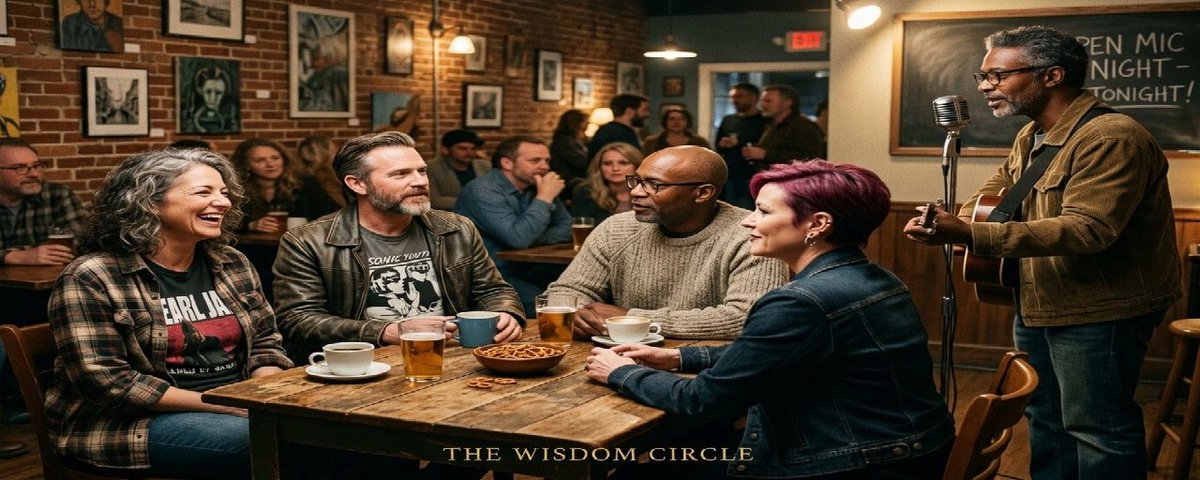
The Erasure of the Living Floor
Start with the ones nobody romanticizes. Not the silver-haired grandmother pressing cookies into small hands. The other kind: the retired foreman who spots the flaw in your foundation before you pour; the woman at the end of the table [who simply notes] that your "innovative" policy already failed two decades ago; the person who breaks the polite silence and says what is true.
These are not the elders of greeting cards. They are load-bearing members of a functional society—the ones a room most needs.
The Quiet Removal
No one set out to sideline them. It happened through ordinary decisions that accumulate: workplaces easing people out in their fifties under the frame of "opportunity" or "obsolescence"; retirement treated as a clean endpoint rather than a transition; communities and programs that sort older adults into parallel social worlds, minimizing everyday friction and contact.
We replaced the blunt correction of lived experience—"That's a mistake"—with systems designed to avoid saying it directly. Consultants rediscover known failures. Compliance frameworks turn judgment into process. Language softens until correction arrives too late, slower, and more expensive.
What Was Lost: The Living Base
Elders provide a living floor for human behavior—not distant instruction, but a constant, physical reference point. In their presence, the baseline of expectation stays visible, firm, and non-negotiable. Remove that anchor, and drift begins immediately.
Without it, younger generations assemble values from shifting inputs: peers, trends, institutional scripts. The result is repetition disguised as progress. We re-argue the same definitions of accountability because the people who lived through the consequences are no longer there to close the loop.
In stable animal groups, including orcas, long-lived individuals past reproductive age carry accumulated memory across cycles others cannot retain. Their role is structural. Post-reproductive female orcas lead pods through scarce years, sharing knowledge of hunting grounds and stabilizing the group through presence—not advice from afar, but being there when conditions turn. Groups with them endure better; their absence raises risks for the next generation.
The mechanism is proximity, not nostalgia.
How It Shows Up in Practice
This function is informal and easy to miss in human settings: the colleague who recognizes a failing pattern early; the neighbor who remembers the flood no one else planned for; the manager who quietly prevents a mistake in passing.
When proximity disappears, so does the correction. Problems that used to be caught early now scale. What failed before becomes information that arrives too late.
The Economics and Measurement of Removal
Modern metrics ignore this contribution entirely. We track forward-looking signals—revenue growth, velocity, innovation, output per quarter. The elder's value is backward-looking and lateral: pattern recognition that prevents repeated errors, institutional memory that reduces rediscovery costs. It registers as zero, so it gets treated as zero.
Isolation among older adults tracks with measurable declines: higher inflammation, elevated blood pressure, faster cognitive drop, worsening metabolic health. These are framed as individual aging issues. They are also the physiological trace of lost connection—for both the isolated and the groups that removed the anchor.
The language of aging does much of the erasing upfront. Label someone "senior" or "elderly," and their observation shifts from strategic intelligence to "resistance to change." The same sentence from a forty-year-old sounds prescient; from a seventy-year-old, it's dismissed.
Not Every Voice, But the Role Matters
Not every older person carries this well. Some harden, lose curiosity, or default to blanket dismissal. That is real. It does not justify removing the role entirely. A system that makes no room at all loses a constraint that is hard to replace: the drag that keeps things from spinning out, the steadying force that interrupts drift before it compounds.
Environments that retain this presence are not necessarily warmer. They are steadier. They burn less energy rediscovering old problems from scratch.
The Correction
Nothing collapses overnight. The erosion is gradual: more time spent reinventing known failures, problems caught after they scale, repetition mistaken for novelty because the memory that would interrupt it is gone.
This is not nostalgia for perfect people. It is recognition of proximity and its function. We did not lose flawless elders. We lost the living floor—the non-negotiable base that keeps societies, organizations, and groups from floating away on the latest trend or untested idea.
Rebuilding it requires more than programs or consultants. It starts with stopping the quiet removal and making room for the blunt, experienced voice again—before the next preventable failure reminds us what was there all along.